

Fifteen women, fifteen stories of transforming memory and migration into a movement for dignity.
Before the panels began at the Youth4Peace Final Conference in Lisbon, something else had already filled the room — a soft warmth that smelled of cinnamon, cardamom, and orange blossom.
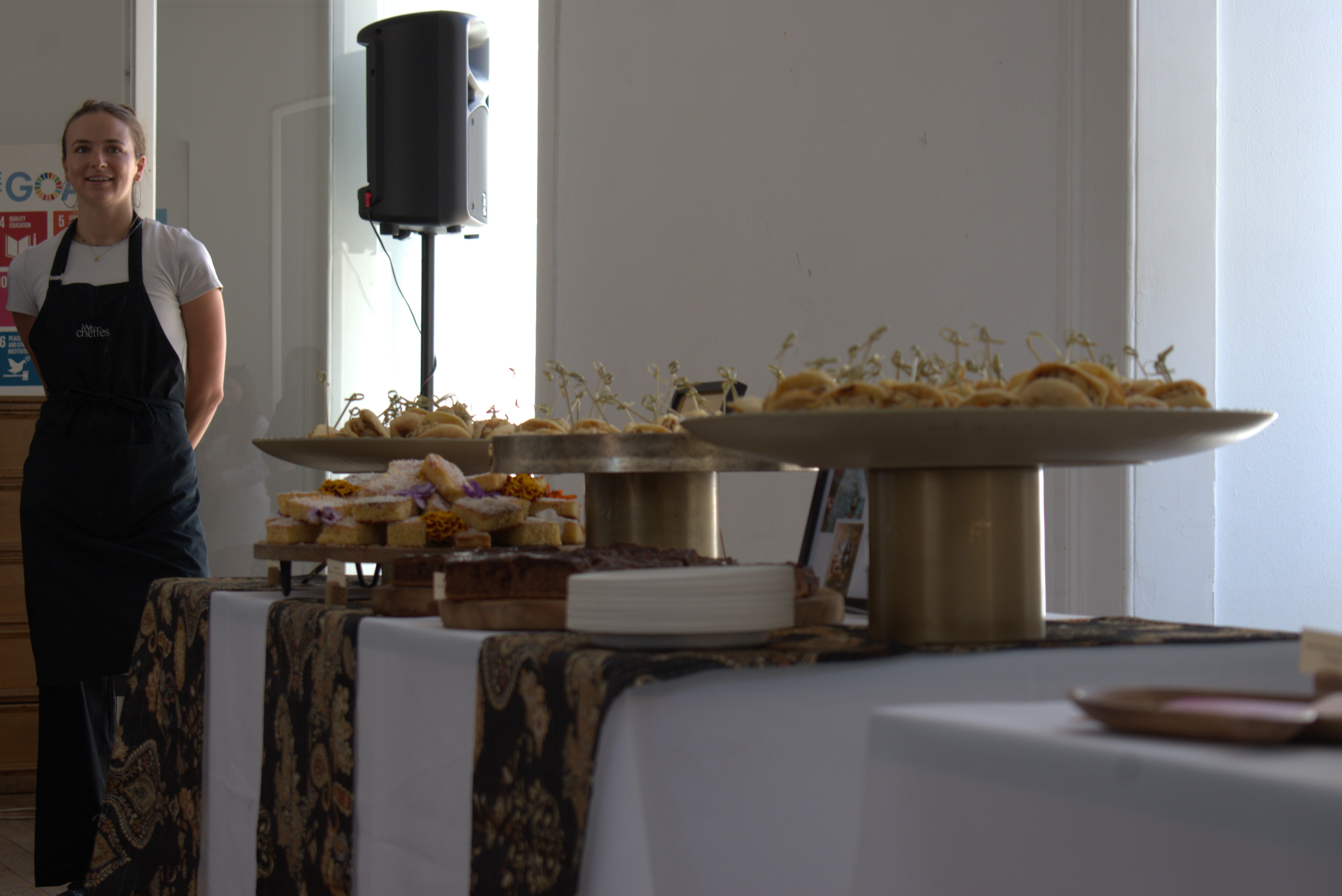
At Casa do Impacto, a group of women moved in rhythm. Trays clinked. Laughter rose. The air hummed with accents from across continents. Their aprons bore one name: We Cheffes.
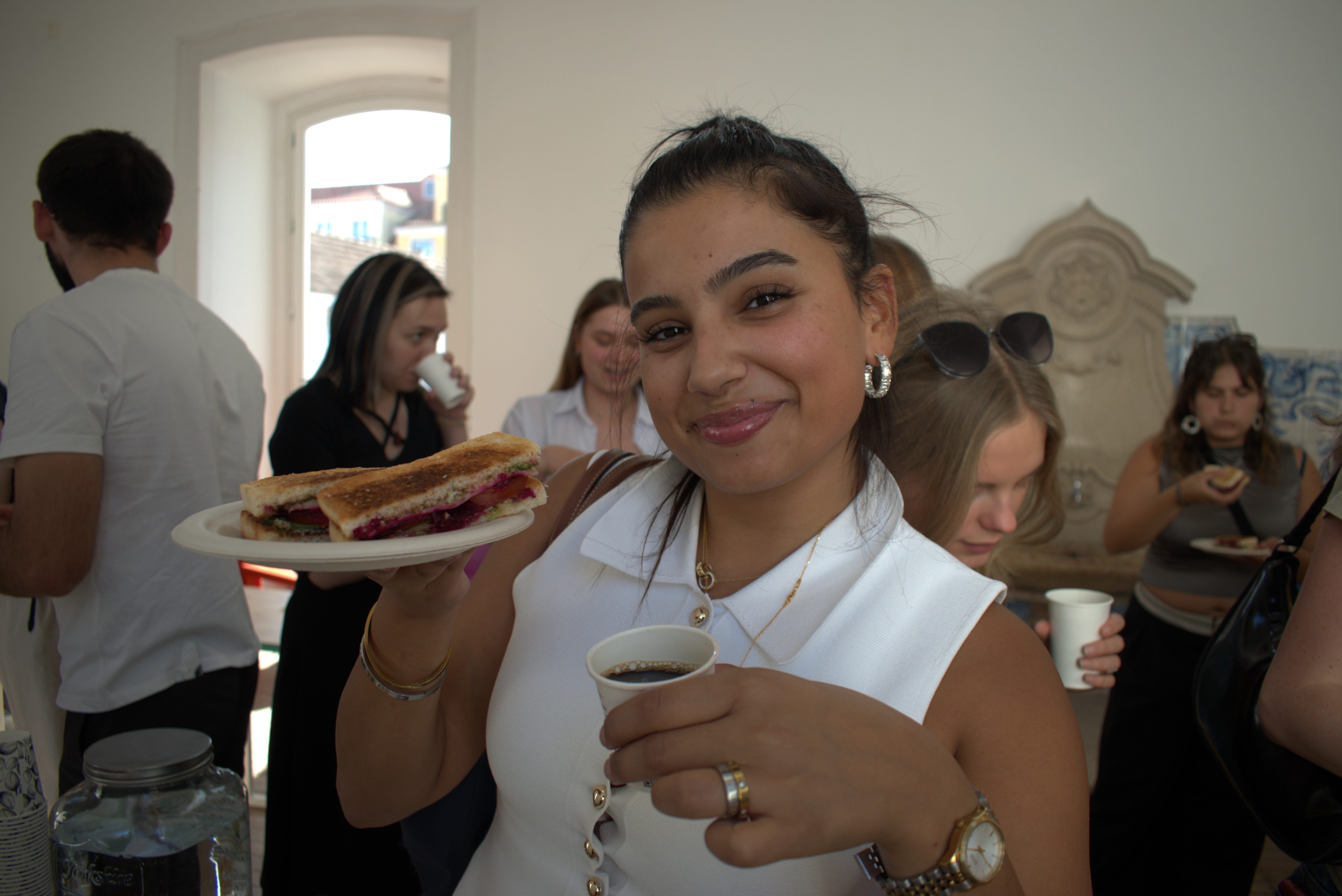
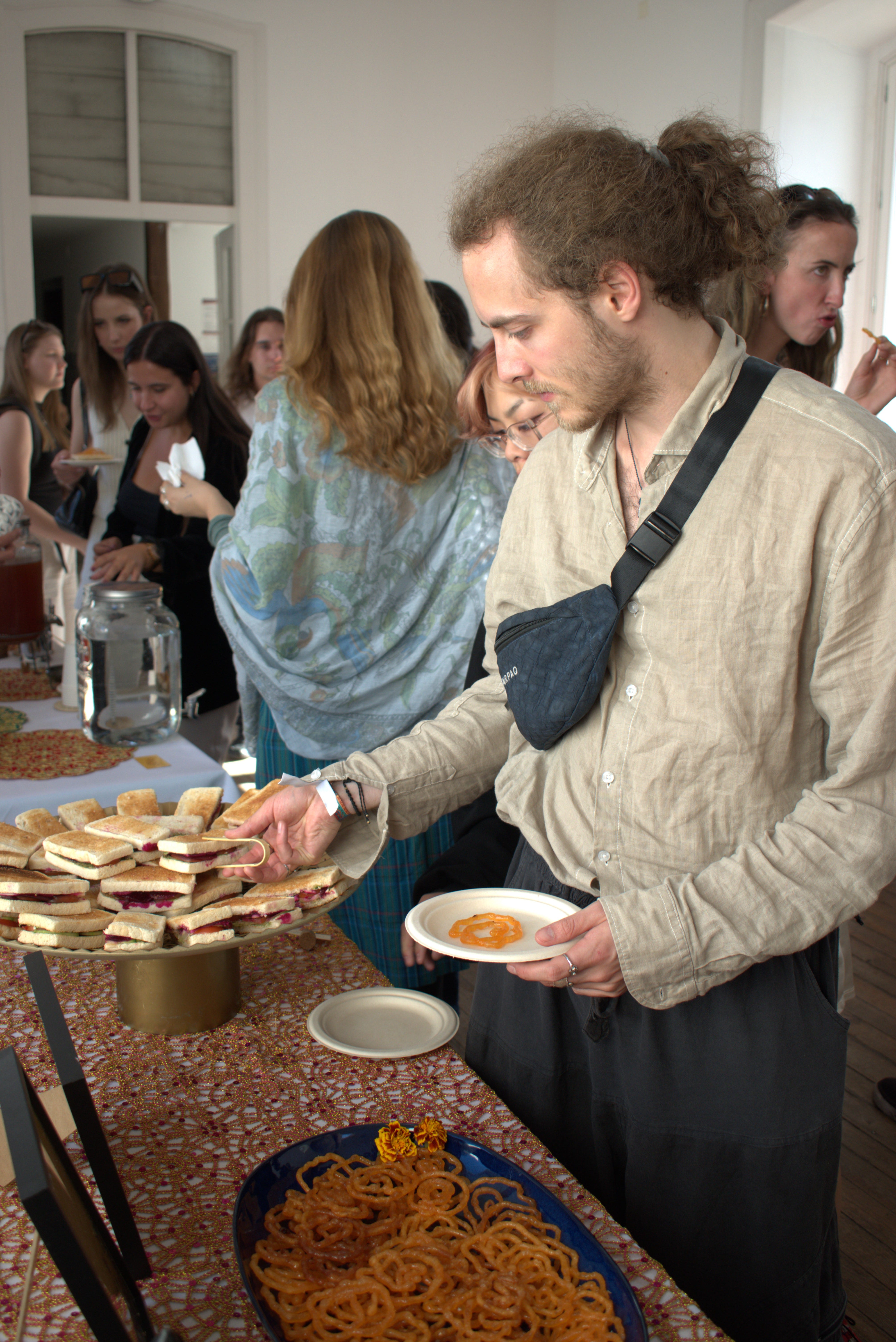
There were Moroccan Batbouts filled with zaalouk, Indian Jalebi glazed in syrup, Brazilian Pão de Queijo warm and golden, and mint tea poured with precision and grace.
Each dish told a story. Each story tasted like home.
When the organisers introduced the team, the applause was instant — not polite, but grateful. Everyone understood this wasn’t just catering. It was community.
We Cheffes is a Lisbon-based social enterprise led by fifteen women from Latin America, Africa, the Middle East, Asia, and Europe. Together, they are reinventing what inclusion looks like — transforming home-cooked knowledge into professional opportunity and turning food into a universal language of care.
Their motto is simple: Authentic, homemade food made with love by women from around the world.
But behind those words lies a quiet revolution — one that redefines what power, professionalism, and peace can mean.
The Invisible Labour of Care
Across the world, women cook most of humanity’s meals.
They feed cities, sustain families, and carry the emotional labour of daily life.
And yet, the more essential their work is, the less visible it becomes.
In restaurants, “chefs” are celebrated — often men. In homes, “cooks” are assumed — often women. The line dividing recognition from invisibility is not talent; it’s power.
Many of the women behind We Cheffes spent years cooking for others, in community kitchens, schools, or private homes, without acknowledgment or fair pay. When they migrated to Portugal, their skills were dismissed as domestic, not professional.
But the truth is, they were already experts.
Their work carried technique, heritage, and emotional precision. It carried the wisdom of feeding, the psychology of healing, the art of connecting.
So when We Cheffes says it’s “time to honour the true cooks of our lives,” it’s not marketing — it’s an act of justice.
By naming each participant Cheffe — the feminine counterpart of “Chef” — the project restores dignity to a lineage of women whose craft was always professional, even when society refused to pay for it. It asserts that care is not soft — it’s structural. That feeding others is not “helping” — it’s leadership.
The Intersectional Kitchen
The kitchen has always been a mirror of society.
It shows us who is trusted, who is heard, and whose culture gets to define “taste.”
For migrant women, those inequalities multiply.
They face not just gender bias, but the intersection of race, class, and legal status. As feminist scholar Kimberlé Crenshaw wrote, discrimination doesn’t happen in layers — it happens at crossroads.
In Lisbon, that crossroads is particularly visible. The city celebrates diversity, yet its hospitality industry still mirrors colonial hierarchies: white male chefs at the top, women of colour often unseen in the background.
We Cheffes flips that structure.
Here, diversity is not decoration — it’s direction. Each woman is supported to operate as an independent professional, with training in hygiene, business, and legal compliance. They are entrepreneurs, not employees; creators, not commodities.
It’s intersectionality in action: gender equality meeting economic inclusion, meeting cultural recognition — all held together by a shared table.
At the Youth4Peace event, as these women prepared food for participants from 10 European Countries, they embodied what integration can look like when it’s rooted in dignity.
Not charity. Not assimilation. But agency.
Recipes as Resistance
In every kitchen, there’s a revolution happening quietly.
You can smell it before you see it.
Cheffe Naima from Morocco served Batbout, a stuffed bread filled with zaalouk — a smoky aubergine and tomato paste — and Meskouta, an orange-scented cake she described as “sweetness for peace.” For her, cooking is a bridge between her two homes.
Cheffe Niyanta from India offered Sanduíches de Bombaim and Jalebi — delicate spirals soaked in syrup, glowing like amber in the afternoon light. An engineer by training, she sees food as design.
Cheffe Polly from Brazil filled the table with abundance — Pão de Queijo Recheado, Empadinhas de Cogumelos, Dadinhos de Tapioca. For her, joy itself is activism — proof that care can be generous and confident at once.
Cheffe Minna, from Hong Kong, folded Briouats de Atum with origami-like precision, each triangle a testament to patience and pride.
Each recipe carries geography, memory, and defiance.
Together, they form a manifesto written in taste: a refusal to be invisible, a reclamation of authorship.
The Architecture of Opportunity
What makes We Cheffes exceptional is its structure.
It’s not just a story of empowerment — it’s a system redesign.
Each woman is registered as an independent catering provider — legally recognised, trained, and supported. The project offers mentorship in business, logistics, and communication, ensuring that every Cheffe builds her own sustainable pathway.
This matters.
Too often, “social” projects inadvertently reinforce dependency. We Cheffes does the opposite: it decentralises power, equips women with professional autonomy, and turns informal expertise into formal entrepreneurship.
The model operates like a cooperative startup.
Menus are co-created, events matched to each Cheffe’s specialty, and income distributed transparently. The coordination team handles administration, allowing the women to focus on what they do best — creating, leading, innovating.
When We Cheffes catered the Youth4Peace conference, it wasn’t just a meal — it was a logistics network, a multicultural production line, and a civic statement.
It showed what happens when empathy and efficiency coexist.
When systems are designed not to extract, but to uplift.
From Margins to Mainstream
Across Europe, policy frameworks echo what these women live every day.
The EU Gender Equality Strategy 2020–2025 calls for closing gender gaps in entrepreneurship. The EU Action Plan on Integration and Inclusion urges recognition of migrant women’s multiple barriers. We Cheffes is those strategies embodied — not as paperwork, but as practice.
Its success lies in refusing the label of “social” or “migrant” catering. It aims for excellence, not exception. Clients book We Cheffes not out of sympathy, but admiration — because the food is extraordinary, the service impeccable, the story unforgettable.
This is inclusion without dilution: diversity not as tokenism, but as a force of creativity.
Each menu, each collaboration, is a reminder that Europe’s strength lies in its pluralism, in the ways it allows old worlds to meet new ones, and tradition to become innovation.
And that, in essence, is what REDefine’s Youth4Peace initiative was about.
Where the EU Democracy Campus uses virtual reality to teach democracy, and The Rights Chronicles uses animation to teach human rights, We Cheffes teaches inclusion through taste.
All three are driven by the same philosophy: that civic intelligence grows when we combine structure and soul — when systems think, and people feel.
Beyond the Plate
When the conference drew to a close, there was a quiet hum of contentment.
The scent of mint tea lingered. Laughter still floated between conversations about the future of Europe.
And somewhere in that room, a simple truth settled in: peace isn’t always negotiated. Sometimes, it’s prepared.
We Cheffes shows that civic transformation begins in the most human of places — the kitchen, the shared table, the act of serving with care.
It reminds us that women’s work is the architecture of survival; that migration carries not just struggle, but wisdom; and that inclusion, when practiced fully, tastes like connection.
So when we speak of innovation, we should also speak of Naima’s Meskouta cake, of Niyanta’s Jalebi, of Polly’s laughter, of Minna’s patience — because in their hands, Europe’s future looks a little more whole, a little more human.
They remind us that empathy is not softness.
It’s design.
And that the real recipe for peace might just begin with this —
a shared meal,
a moment of recognition,
and the courage to say,
we belong.
When the women cook, they’re not just serving food — they’re serving visibility.
Each plate is proof that resistance can be tender, that solidarity can be delicious.
🍲 The free version captures the flavour; the full story reveals the design. You can read it here:
https://associationredefine.substack.com/p/more-than-food-how-we-cheffes-is-696?r=6l8ed8
