

Inside REDefine’s virtual experiment that turned 1,000 young Europeans into active citizens — one debate, one pledge, one shared reality at a time.
It begins with silence—the kind that never exists online.
A few dozens of avatars stand beneath a ring of EU flags that shimmer as if in slow breath.
One of them, a 19-year-old from Izmir named Deniz, raises her hand to speak.
Across the virtual floor, a caption blossoms in three languages: “We all want peace, but what can we do to achieve it?”
Her voice reaches Lisbon a heartbeat later.
For five days, the avatars will move through halls, galleries, and crisis rooms that mirror the architecture of European democracy.
They will debate, translate, disagree, and laugh. They will forget that the people they’re arguing with live four thousand kilometres away.
And when it’s over, many will say they finally understood what democracy feels like.
A Crisis of Participation
The story began with a statistic that haunted our team:
in 2024, the Eurobarometer showed that while 80 percent of young Europeans said democracy mattered, fewer than half believed they could influence it.
They trusted the idea, not the system.
At REDefine that gap felt personal. If democracy was built on participation, then the software of participation clearly needed an update.
What if young people could step inside democratic systems, instead of studying them from afar?
That question sparked an experiment that sounded almost impossible: build a fully interactive VR Replica of the EU Parliament Complex in Strasbourg where democracy could be experienced, not just discussed.
The Hypothesis
“How do you teach democracy to a generation raised inside the algorithm?”
— Project lead, REDefine
We suspected that empathy and engagement could scale as efficiently as misinformation and outrage —if designed with the same precision.
So we designed a digital twin of civic life: the EU Democracy Campus, an immersive environment accessible by headset, laptop, or phone.
No downloads, no installations; only a browser and curiosity.
Within its walls, history, law, and emotion were stitched together into a single narrative.
Participants would walk through the Galleries, debate in the Parliament Hall, face ethical dilemmas in Crisis Labs, and end by drafting collective manifestos for “Europe 2050.”
The goal wasn’t simulation. It was rehearsal.
Building the Campus
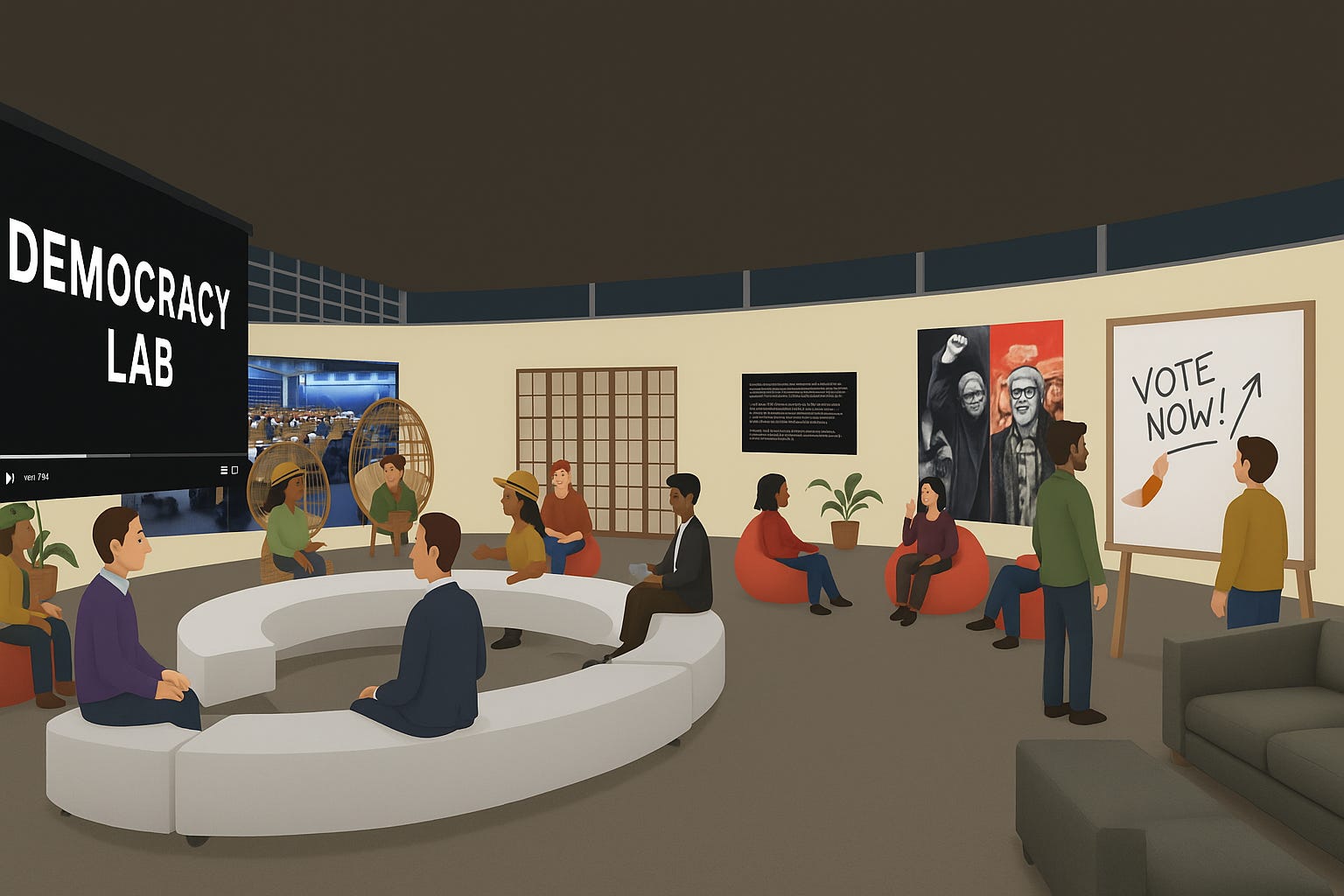
Over six months, designers, educators, and youth workers transformed an idea into an infrastructure.
The environment was built on FrameVR, chosen for its stability and low bandwidth requirements.
Each virtual room carried pedagogical intent:
- The Galleries began in shadow, then opened into light—a visual metaphor for Europe’s journey from war to cooperation.
- The Parliament Hall replicated the semicircular chamber of Strasbourg, teaching procedural equality: every avatar at the same height, every voice with equal weight.
- The Crisis Lab simulated disinformation storms and humanitarian emergencies, forcing teams to decide under pressure.
- The Activity Rooms provided the spaces for collaboration, in-depth reflection and policy design
Inclusivity was coded into every line: AI-driven captions in Portuguese, Turkish, and English; high-contrast mode for readability; “safe mode” for low-bandwidth users.
No one would be excluded by language or hardware.
The First Session
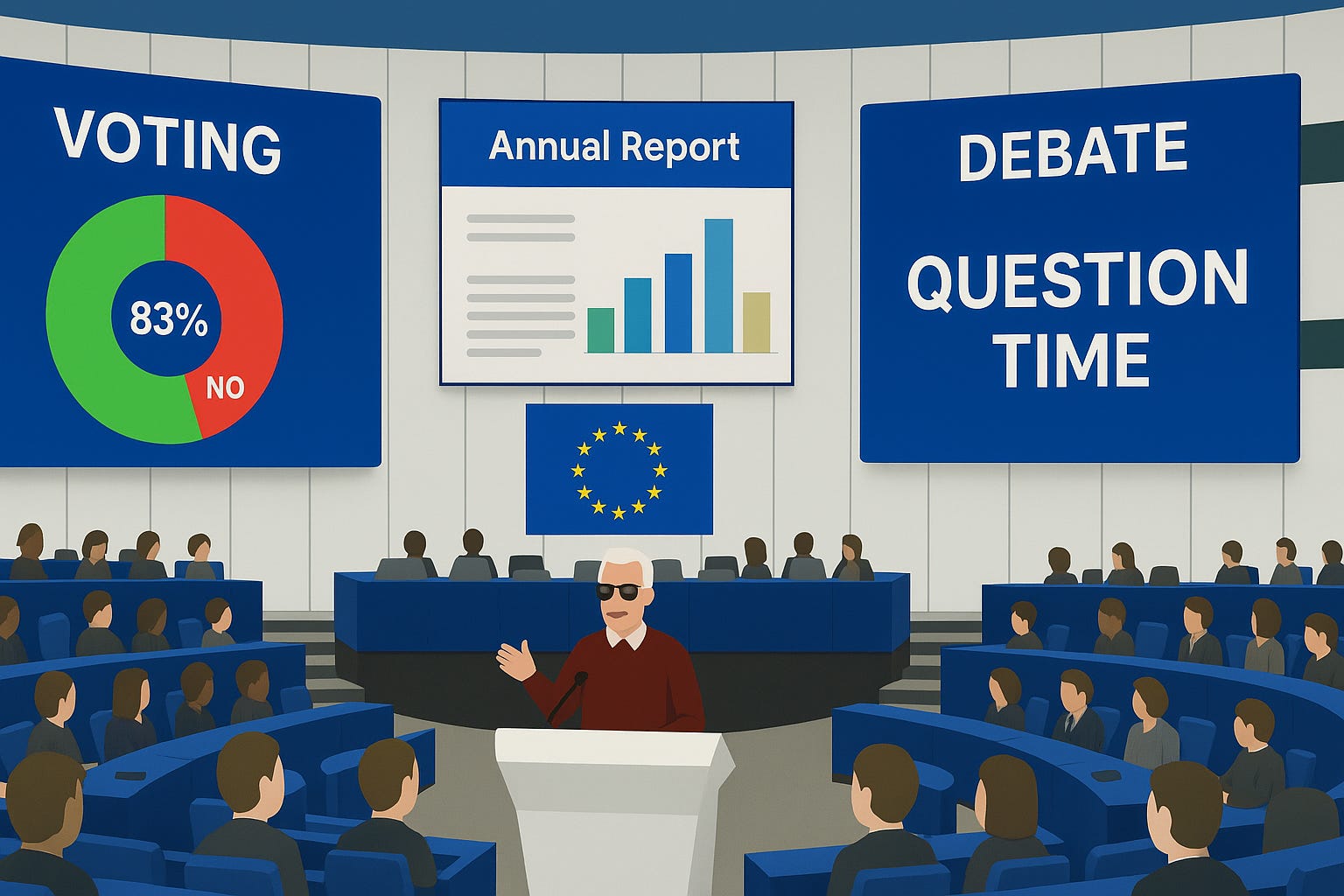
When the Campus opened in the beginning of 2024, the facilitators were nervous.
Would teenagers take a virtual parliament seriously?
Would the tech hold?
Would the idea survive reality?
It did—spectacularly.
Within hours, the students forgot they were in VR.
They moved through galleries whispering to one another about treaty dates and peace accords; they negotiated policy proposals with the same passion usually reserved for games.
In one activity room, a Portuguese student argued for stricter digital-privacy laws while her Turkish teammate countered that freedom of speech should come first.
The debate grew heated, then paused when an avatar raised a virtual hand and asked, “How do we balance safety and truth?”
Emotion as Infrastructure
For the facilitators, these moments were gold.
REDefine had designed the programme around a simple belief: emotion is civic data.
Each session included check-ins—short pauses where participants named what they were feeling and linked it to democratic values.
Anger could point to injustice, confusion to complexity, empathy to responsibility.
“The moment a Portuguese participant said, ‘Now I understand what democracy feels like,’ the entire room went silent—even in VR.”
— Facilitator, REDefine
By connecting feeling to principle, the project built what the team called democratic reflexes—the emotional agility to stay engaged even when uncomfortable.
Two Countries, One Conversation
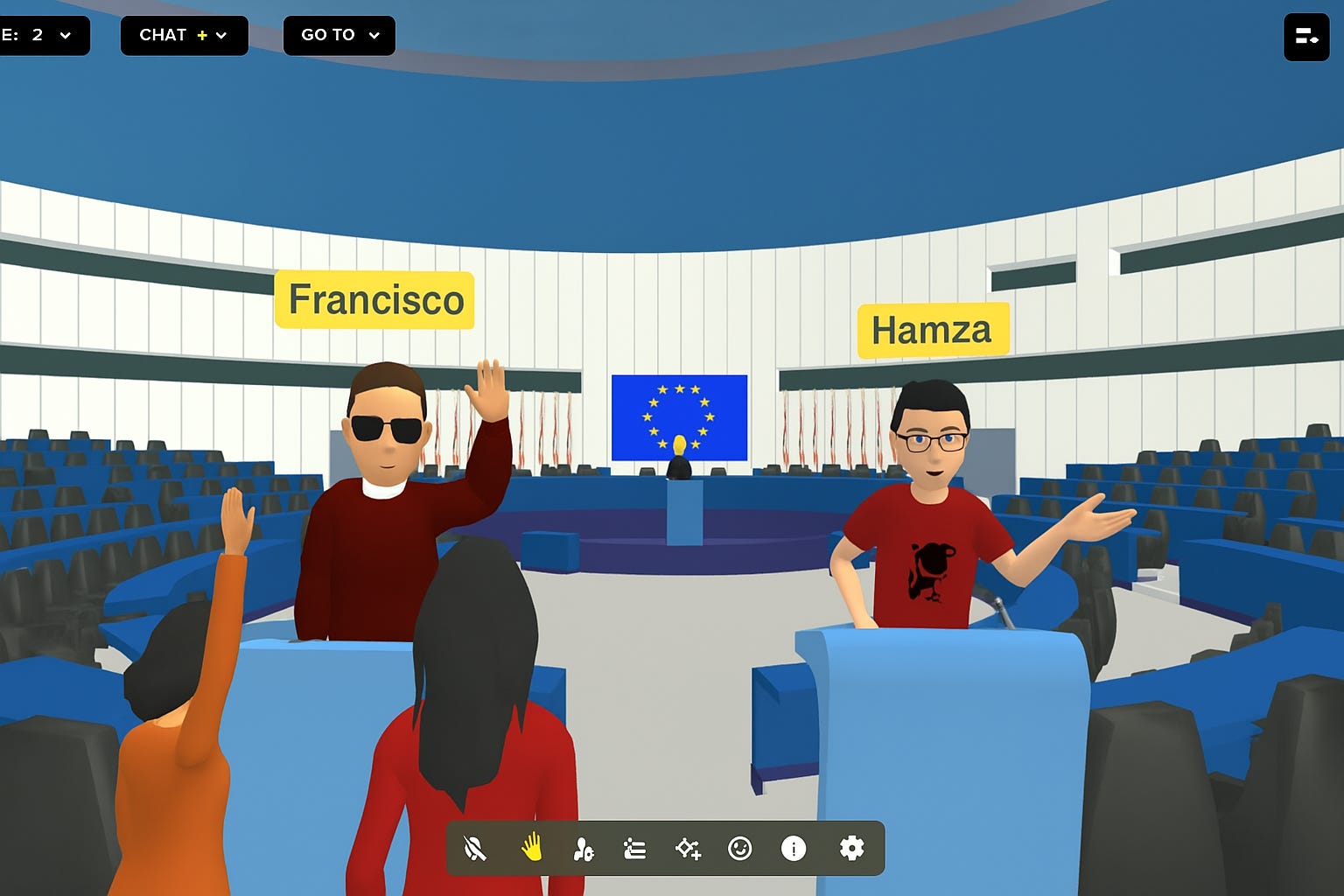
Portugal and Türkiye could not have been more different laboratories.
In Portugal, democracy is memory: the Carnation Revolution still flowers in balconies each April.
In Türkiye, it is aspiration: a system still being contested, shaped, and dreamed into being.
Inside the Campus, those perspectives met—and started to dance.
The Portuguese cohort brought reflection; the Turkish, urgency.
Their nightly debriefs became mini-summits: history meeting momentum.
“We have the same values, but different accents.”
— Participant reflection, Türkiye
That line became the unofficial motto of the project.
The Joint Sessions
When both cohorts finally entered the same virtual chamber for a transnational debate, something rare happened: a European conversation that felt genuinely shared.
They drafted a Youth Declaration for Positive Peace, analysed propaganda clips from their own media landscapes, and designed collective Vision 2050 boards that merged activism with art.
One screen showed a sentence in three colours: Empathy is our infrastructure.
“Even though we were in different countries, it felt like we were in the same room. The avatars disappeared; only ideas remained.”
— Participant, Türkiye
The facilitators watched from the control dashboard, stunned.
We hadn’t just built a classroom; we’d built a continent.
What the Numbers Say
When the experiment ended, the evaluation data told a story as compelling as the visuals:
- Knowledge of EU institutions and values: +22.4 points
- Media and Information Literacy: +18.7 points
- Civic self-efficacy (1–5 scale): +0.62
- Post-programme civic action: 62 percent of participants launched initiatives within three weeks
- Satisfaction rate: 96 percent
But numbers only confirmed what was already visible: behaviour had changed.
Students who barely spoke in physical classrooms were moderating debates.
Shy participants stayed late in the Agora, comparing pledges.
Facilitators noted that empathy had become measurable—not as sentiment, but as sustained attention.
Learning That Moves
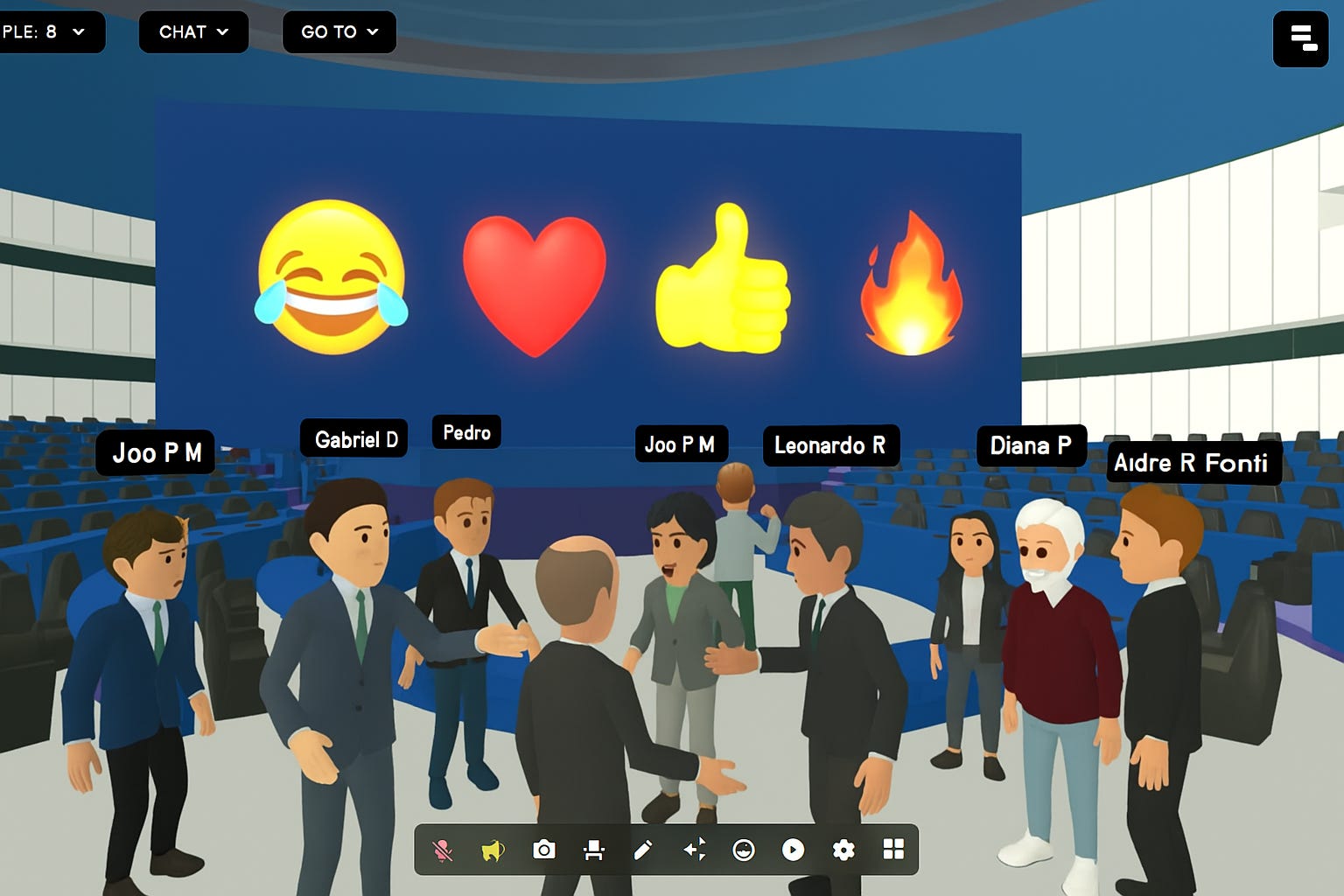
The Campus’s design followed a rhythm more musical than curricular:
- Memory → empathy for Europe’s past
- Process → mastery of democratic procedure
- Participation → ownership of civic agency
- Resilience → literacy against manipulation
- Vision → imagination for the common future
Each day closed with reflection circles guided by the “Four Fs”: Facts, Feelings, Findings, Futures.
It was experiential learning turned symphonic—each movement resolving what the last had stirred.
The Ripple Effect
When the virtual doors of the Campus closed, the echo didn’t fade—it multiplied.
Across Lisbon, Porto, Izmir and Ankara, WhatsApp groups that had begun as coordination chats turned into micro-movements.
Participants launched civic cafés, digital-literacy workshops, environmental drives.
They used the same “Four Fs” reflection tool—Facts, Feelings, Findings, Futures—to debrief real-world problems: a housing protest, a school inclusion project, a local campaign for safe online spaces.
By the third week, facilitators counted more than sixty new civic initiatives led by alumni.
Some were small, one-day events; others became registered youth associations.
Democracy had left the headset.
“We didn’t just learn democracy,” Deniz wrote in her follow-up survey.
“We started to use it.”
How the Model Works
Behind the emotional storytelling lies a remarkably disciplined learning engine.
The EU Democracy Campus follows a five-day experiential arc aligned with the EU Key Competences and the Council of Europe’s Reference Framework for Democratic Culture.
Each day has its own rhythm—action, emotion, reflection—and together they form a complete cycle.
The model can run on any device and be adapted for classrooms, hybrid sessions, or fully virtual trainings.
Its Universal Design for Learning principles—high-contrast visuals, multilingual captions, simplified navigation—mean that technical inclusion is democratic inclusion.
One facilitator described it simply:
“Accessibility wasn’t an add-on; it was the value being taught.”
The Architecture of Empathy
The most radical element of the Campus was invisible: its emotional infrastructure.
Each debate, simulation, and reflection loop was designed to cultivate empathy as a civic skill.
Participants learned to stay present through discomfort—to listen instead of react.
When conflict arose in the Crisis Lab, youth workers used emotional-literacy prompts:
What value is threatened? What would repair trust here?
By the end of each weekly cycle, 94 percent of participants reported feeling more confident in intercultural dialogue.
Facilitators noticed quieter students moderating discussions and outspoken ones pausing to ask questions before rebutting.
In post-programme interviews, one teacher said:
“Empathy stopped being a feeling; it became a discipline.”
Lessons from Two Contexts
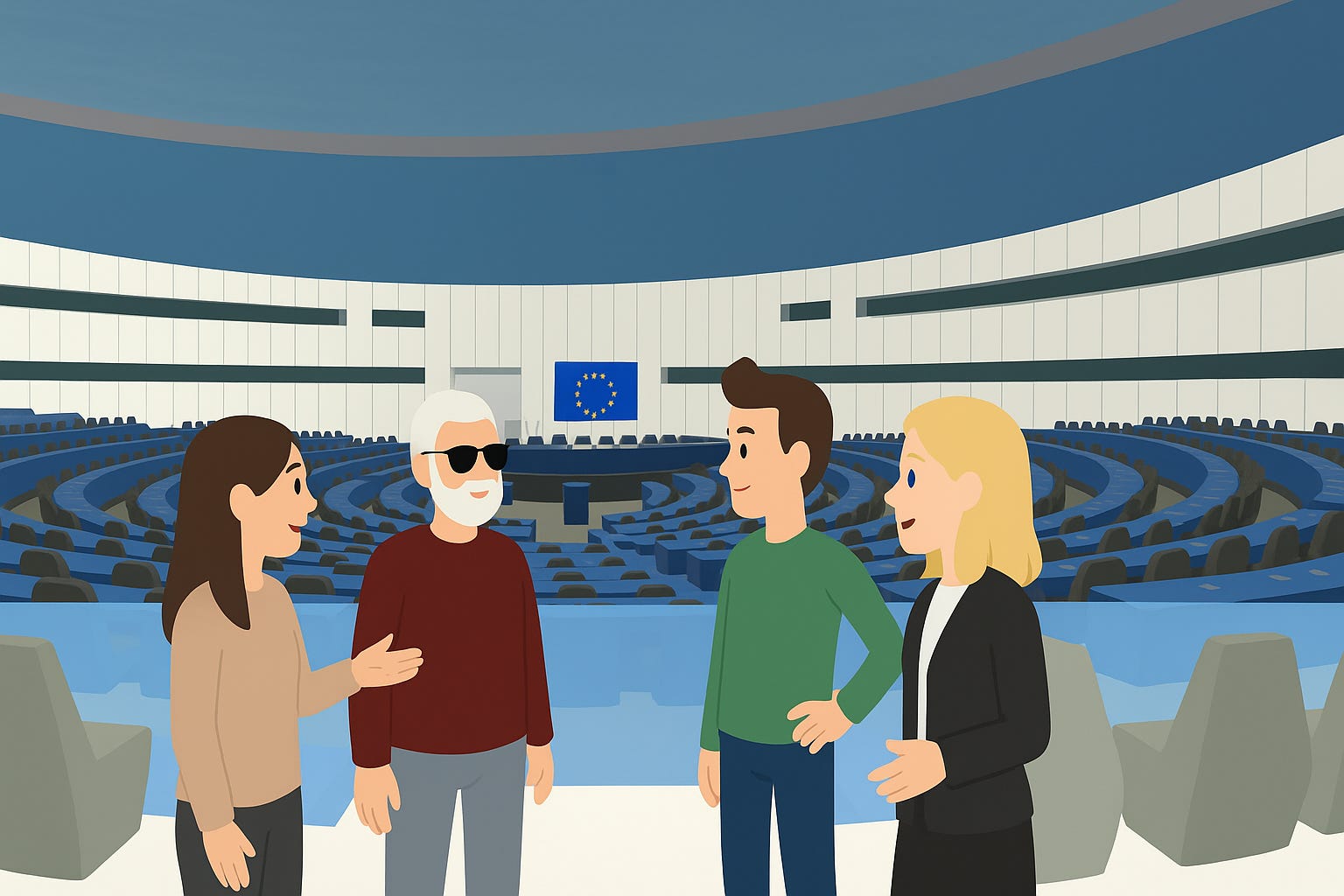
Portugal and Türkiye offered contrasting democratic biographies—and that contrast became the programme’s hidden strength.
In Portugal, democracy is memory work.
The Carnation Revolution remains a civic myth retold each spring; remembrance shapes national identity.
Workshops there leaned on reflection, historical empathy, and the ethics of peace.
In Türkiye, democracy is a daily negotiation.
Young participants approached the Campus as a rehearsal for belonging—a test environment for the institutions they want to strengthen.
Their energy drove the pace; their debates pulsed with reformist urgency.
When both groups met online, those currents fused into one current of shared agency.
“Portugal brought the mirror,” a Turkish facilitator said. “We brought the megaphone.”
The intercultural synergy proved that diversity is not an obstacle to democratic learning—it’s the method.
What Partners Learned
REDefine and ISMA distilled the experiment into seven transferable insights for future programmes:
- Democracy is learned by doing, not declaring.
- Emotion is information. Civic education without emotional literacy is incomplete.
- Inclusion must be designed, not improvised. Accessibility is participation.
- Technology becomes democratic only when guided by empathy.
- Intercultural dialogue builds resilience faster than lectures.
- Youth trust evidence they help create. Co-design turns learning into ownership.
- Peace begins with practice. Every respectful disagreement is a rehearsal for peace.
These principles now inform REDefine’s broader portfolio—from resilience education to digital-governance training.
Why It Matters
In an era of collapsing attention and rising cynicism, the EU Democracy Campus offers something radical: presence.
Not the constant, hyper-connected presence of social media, but the slower, more deliberate presence of shared thinking.
It reminds Europe that democracy is not a relic to be protected—it’s a craft to be practised.
And practice requires space.
That space now exists—in 3D.
Access and Acknowledgement
All materials from the project are freely available in the
EU Democracy Campus Pack, including the full report, toolkits, and facilitator guides.
Visit 🔗 REDefine Resource Library to download.
This project — Youth4Peace — is co-funded by the European Union under the Erasmus+ Programme (ERASMUS-YOUTH-2023-YOUTH-TOG).
Views and opinions expressed here are those of the authors only and do not necessarily reflect those of the European Union or the granting authority. Neither the European Union nor the granting authority can be held responsible for them.
