

Turning civic apathy into civic design: how MyPolis is making democracy interactive, inclusive, and fun again.
The Classroom Where Democracy Woke Up
In a school in Torres Vedras, a group of teenagers debates how to make their town better.
They’re not role-playing — they’re re-designing reality.
Some vote to build a bike path. Others want a youth festival. Someone insists on fixing the school’s Wi-Fi before anything else.
Their ideas are logged in an app called MyPolis — a civic game that turns proposals into points, and participation into progress.
It’s democracy, reinvented for the touchscreen generation.
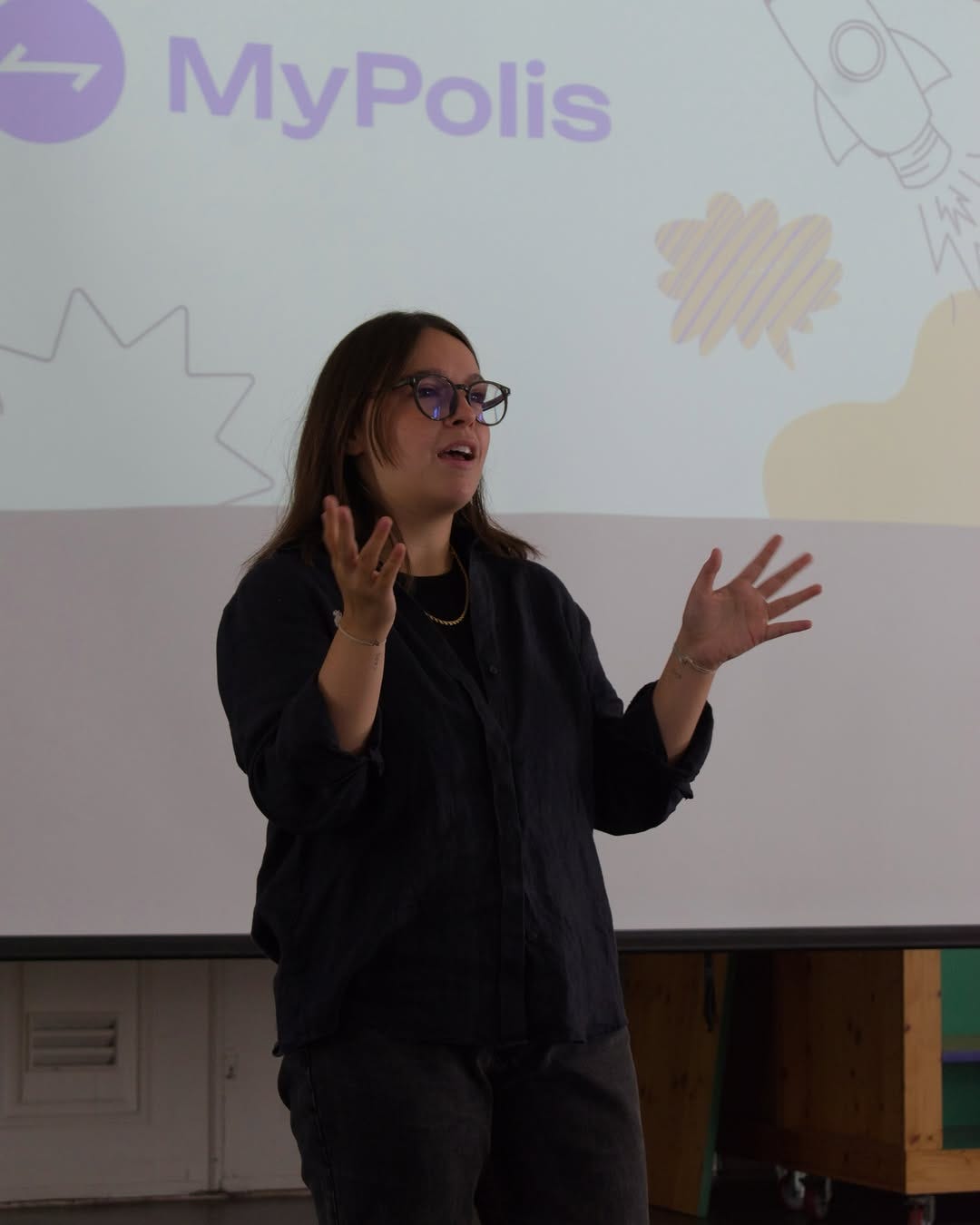
Or as Gabriela Moutinho from MyPolis said, “We didn’t just rebuild the system. We rebuilt the feeling of belonging to it.”
Democracy, but Make It Playable
MyPolis began with a simple frustration: young people care deeply about their communities, but the systems that claim to represent them feel locked behind glass.
Petitions go unanswered. Assemblies feel ceremonial. And local government, for many, is invisible.
So a group of young Portuguese changemakers decided to flip the script.
If politics could be gamified, could participation become addictive — in a good way?
Today, MyPolis operates in 30 municipalities across Portugal, connecting thousands of citizens and public officials in a continuous conversation about how to improve local life.
Its platform rewards civic actions with experience points and levels — from Citizen Beginner to Star of the Polis.
The more you participate, the more visible your impact becomes.
It’s playful, but not trivial. It’s democracy by design.
From Idea to Impact
MyPolis’s Youth Participatory Budgeting process has turned classrooms into civic incubators.
Young people don’t just vote on proposals — they design the entire process, from the rules to the rollout.
By 2025, the numbers told the story:
- 60,000+ young participants
- 5,500 proposals submitted
- 200+ implemented projects
- 115 participatory assemblies held nationwide
In Lisbon, students proposed “Bikes and Books” — linking libraries with sustainable transport.
In Lagoa, a Youth Festival co-created by students now fills the summer calendar.
In Torres Vedras, students designed community gardens and safer routes to school.
These are small projects with disproportionate meaning. Each one says: we belong here.
Learning by Doing Democracy
The secret behind MyPolis’s success isn’t just software — it’s pedagogy.
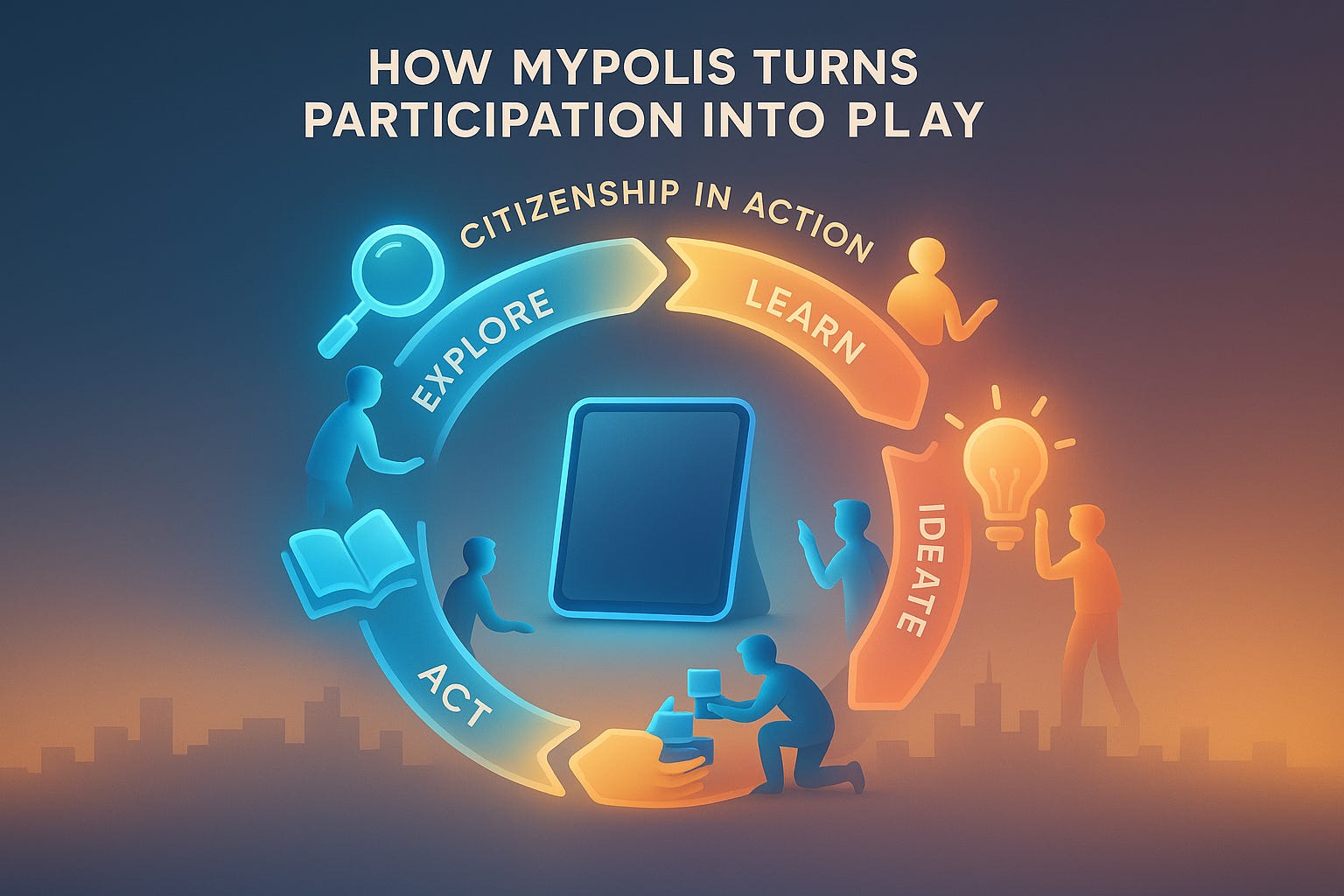
Its Citizenship in Action methodology replaces civics textbooks with hands-on participation.
Students explore local challenges, co-create solutions, present them to real decision-makers, and track outcomes through the platform.
Teachers become facilitators. Mayors become mentors.
Participation earns not just points, but skills: empathy, negotiation, collaboration.
The process follows five verbs that define the MyPolis journey:
EXPLORE. LEARN. IDEATE. ACT. SHARE.
It’s a simple formula that transforms apathy into agency — one idea, one assembly, one conversation at a time.
And it’s working.
89% of young participants rated their assemblies positively, and 8 in 10 teachers said the program boosted civic awareness in their schools.
As one teacher reflected, “They’re not learning about democracy anymore. They’re doing it.”
The Algorithm of Empathy
Most algorithms manipulate attention. MyPolis built one that cultivates empathy.
Its platform rewards collaboration over confrontation.
Points are gained not for being loud, but for making things happen: JOGAR, PENSAR, FAZER ACONTECER — “Play, Think, Make It Happen.”
Each level celebrates constructive participation — transforming civic contribution into a source of recognition.
And the world noticed.
MyPolis has been honored with the Digital Democracy Award by the European Commission, named one of the Top 3 projects in digital inclusion in Portugal, and won prizes from Startup Portugal Momentum, Sonae Education, BPI La Caixa Foundation, and Montepio Social Tech.
But behind every trophy is a quieter success:
a student realizing they can talk directly to a city councillor and be heard.
That’s the real currency of democracy.
Why Play Matters
At first glance, gamifying politics might sound risky — as if turning governance into a game could trivialize it.
But MyPolis proves the opposite.
Games teach persistence, collaboration, and strategy. Democracy needs all three.
When students debate, vote, and iterate on real projects, they experience the emotional logic of civic life: the tension between what’s ideal and what’s possible.
And that experience sticks.
It turns abstract rights into lived responsibilities.
As Gabriela Moutinho, the project’s presenter at the Youth4Peace conference, said,
“Democracy must be experienced, not explained.”
That’s what makes MyPolis less a platform and more a pedagogy — a bridge between education and participation.
Local Voices, Global Signal
From the outside, MyPolis looks like a Portuguese success story.
But its implications reach far beyond national borders.
Across Europe, civic education is struggling to stay relevant in a digital world. Participation rates are declining. Trust in institutions is eroding.
Yet here, in a handful of classrooms and community halls, something different is happening: re-engagement through design.
By translating civic processes into interactive, rewarding experiences, MyPolis offers a blueprint for the next generation of participatory democracy.
It bridges the gap between local governance and digital culture — between the agora and the algorithm.
What started in Portuguese schools is now inspiring communities across Europe.
The MyPolis model complements a growing ecosystem of digital democracy initiatives — from youth parliaments to virtual platforms like REDefine’s EU Democracy Campus.
Together, they form a constellation of civic innovation — spaces where young people don’t just consume content but co-create their political environments.
Yet MyPolis remains rooted in something beautifully local.
Its power lies not in scale, but in intimacy — in the meeting between one student’s idea and one official’s attention.
That’s where trust is rebuilt.
That’s where democracy breathes again.
The Legacy of the New Polis
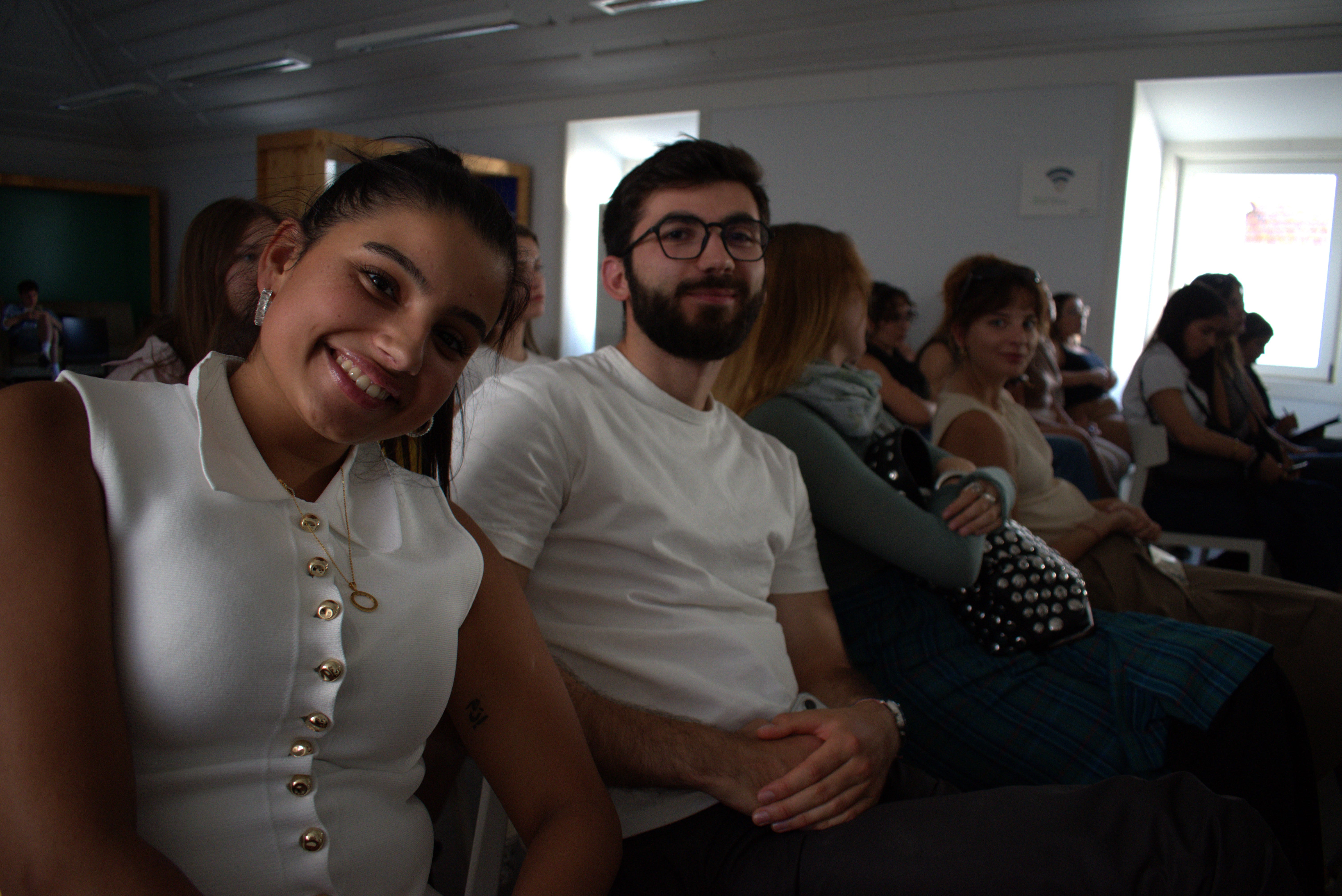
As the Youth4Peace project closed its Lisbon chapter, MyPolis brought new inspiration with its mission and energy.
Its next frontier isn’t just more users or municipalities — it’s deeper integration into public education, civic curricula, and everyday governance.
Because civic technology isn’t about replacing institutions.
It’s about reminding them who they serve.
In a world where outrage spreads faster than empathy, MyPolis offers an alternative interface for engagement — one that rewards contribution, curiosity, and care.
Maybe that’s what the 21st-century polis was always meant to be:
a shared digital square where citizens play, learn, and act together — not for points, but for purpose.
Democracy, after all, isn’t a finished system.
It’s a living game.
And MyPolis made it worth playing again.
🕊️ This story is just the beginning.
In the full feature on Substack, discover how MyPolis is quietly reshaping democracy — one classroom, one idea, one act of peace at a time.
