

When we speak about Europe’s past, the spotlight usually swings toward the darkest chapter: WW2. And rightly so—it was the defining crime of the 20th century, an atrocity that must never be trivialized or forgotten. But in this strong focus, another truth often slips out of view: not all of Europe emerged from World War II into freedom. For millions, the fall of fascism was followed not by liberation, but by new forms of repression.
From the communist regimes of Eastern Europe to the dictatorships of Spain and Portugal, authoritarian systems persisted well into the late 20th century. They left deep scars: political persecution, mass internment, erasure of dissident voices, and the silencing of entire communities. Yet, these stories are often treated as regional footnotes rather than as part of Europe’s collective memory. The result? A fractured historical consciousness, where some victims are remembered with solemnity while others remain in the shadows.
Why These Blind Spots Matter
Memory is never just about the past—it shapes how we defend democracy in the present. Václav Havel once warned that “the tragedy of modern man is not that he knows less and less about the meaning of his own life, but that it bothers him less and less.” That indifference, cultivated under authoritarian systems, remains dangerous today.
The fact that many Europeans, especially in the West, know little about the repression in Franco’s Spain, Salazar’s Portugal, or the Eastern Bloc dictatorships isn’t just a cultural gap. It weakens resilience. A 2023 Eurobarometer survey found that more than 60% of young Western Europeans could not identify human rights violations that occurred in post-war Eastern Europe. Without shared memory, solidarity weakens, and fragmented narratives open space for distortion, nostalgia, and even denial.
Case Studies of Silence
Spain and Portugal
Franco’s Spain (1939–1975) and Salazar’s Portugal (1933–1974) imprisoned and tortured thousands of dissidents. Yet school curricula in Western Europe rarely integrate these histories in a European context. Spanish historian Paul Preston calls this the “Great Silence”, a deliberate forgetting that still divides communities. The 2007 Spanish Law of Historical Memory sought to address this, but its implementation remains contested, with victims’ families still fighting for exhumations of mass graves.
Hungary 1956 and Czechoslovakia 1968
The Budapest uprising against Soviet domination was crushed by tanks, killing more than 2,500 people and forcing 200,000 into exile. Testimonies collected by the Hungarian Institute of Political History describe teenagers shot while carrying flags. Survivors often express shock at how little recognition their struggle receives in broader European narratives.
The Prague Spring promised “socialism with a human face” but was swiftly crushed by Warsaw Pact forces. Milan Kundera later reflected that “the struggle of man against power is the struggle of memory against forgetting.” His words underscore why remembrance is political. Contemporary Czech NGOs now use oral histories from 1968 to teach resilience against today’s disinformation.
East Germany
The Stasi maintained one informer for every 60 citizens. Even after reunification, archives revealed how surveillance created deep generational trauma. The Federal Commissioner for the Stasi Records has shown how opening the files empowered citizens but also tore apart families when hidden betrayals were revealed.
Bulgaria (Georgi Markov, 1978)
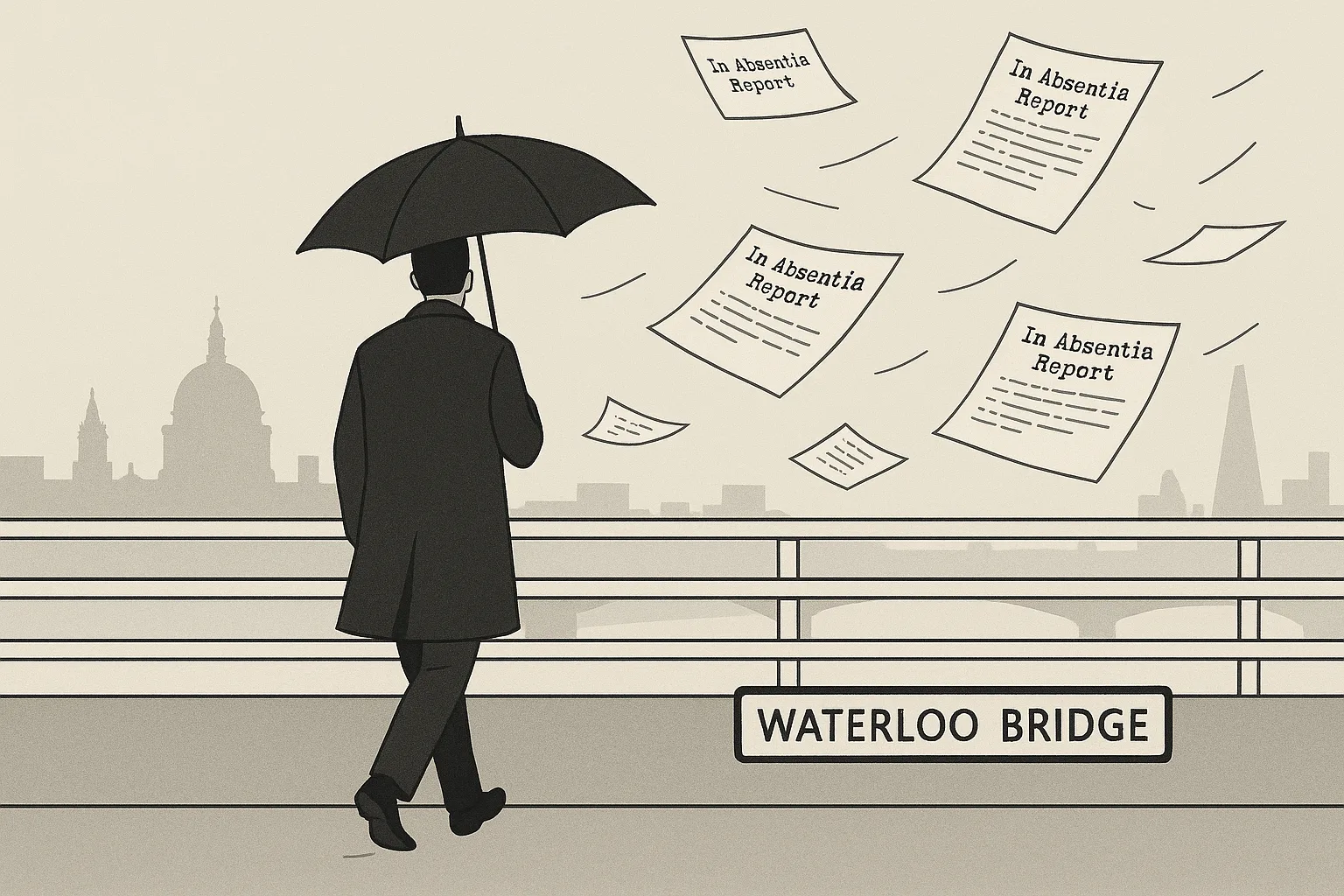
The Bulgarian writer and dissident Georgi Markov became a symbol of the price of truth-telling. After defecting and broadcasting his In Absentia Reports on Radio Free Europe and the BBC—sharp, unsparing portraits of life under Todor Zhivkov—he was attacked on London’s Waterloo Bridge on 7 September 1978 with a micro‑pellet containing ricin. He died four days later. Markov’s own words capture the climate he exposed: “We have seen so many of those demonstrations which humiliate human dignity, where normal people are expected to applaud some paltry mediocrity who has proclaimed himself a demi‑god.” His assassination is not just a Cold War thriller detail—it is a reminder that censorship and political violence reached far beyond the Iron Curtain’s borders.
Contested Memory in Democratic Portugal
Portugal offers a revealing case of memory conflict today. The Portuguese Communist Party (PCP)—historic force in the anti‑fascist struggle at home—continues to dispute European efforts to jointly remember the crimes of totalitarian regimes. When the European Parliament adopted its 2019 resolution on European remembrance (condemning the crimes of both Nazism and Stalinism), the PCP denounced it as an “abject act of historical revisionism” and rejected what it called the effort to “equate fascism and communism.”
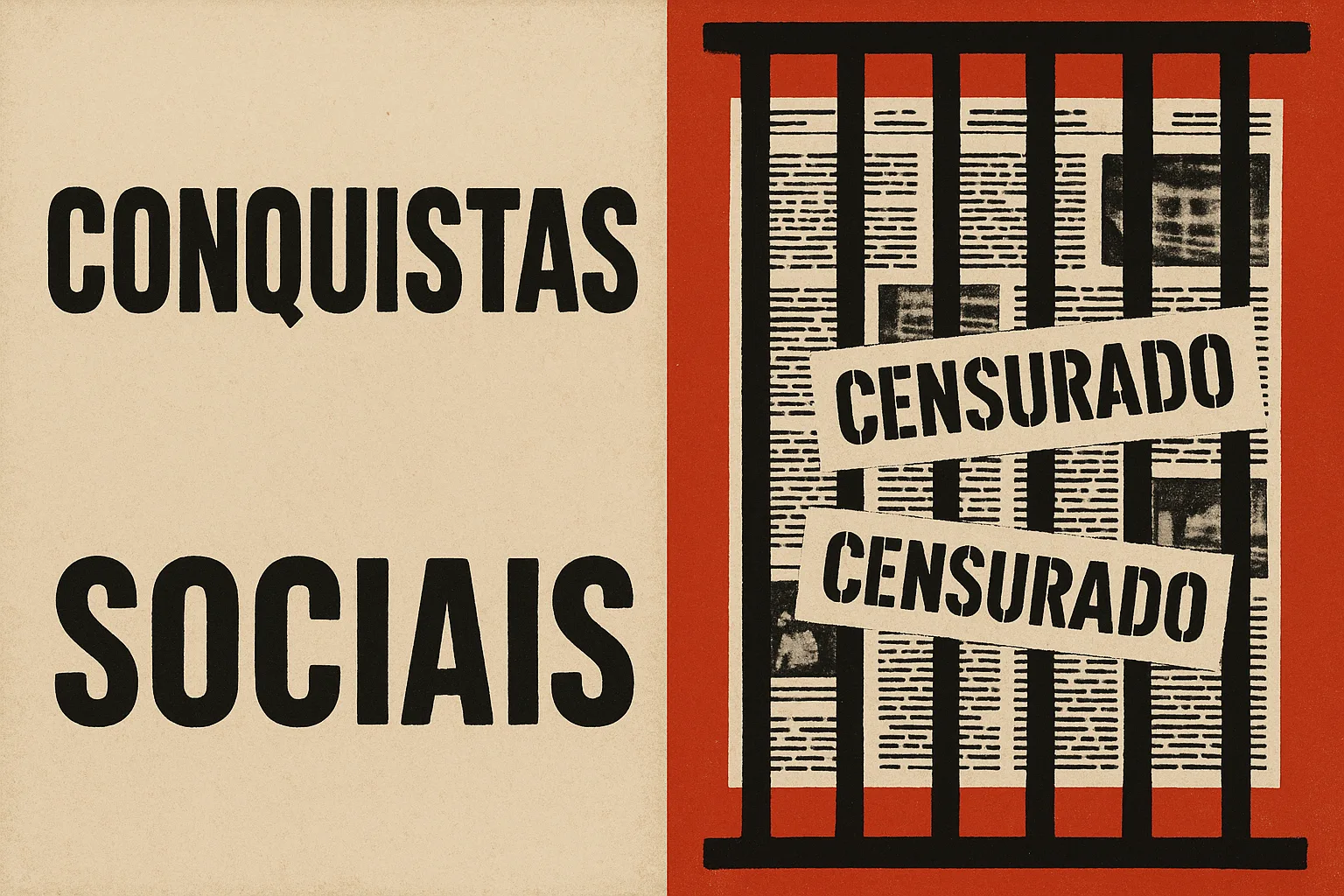
Beyond rejecting the resolution, the PCP’s official documents repeatedly defend the “extraordinary achievements” and “conquistas sociais” of the USSR and Eastern European socialist states, lamenting the post‑1989 “dismantling” of those gains. This narrative of benefits—healthcare, education, employment—coexists with a near‑total silence about political prisons, censorship, surveillance, and mass repression across the Eastern Bloc.
The historical line has deep roots: party leader Álvaro Cunhal publicly supported the 1968 Warsaw Pact intervention that crushed the Prague Spring, arguing against the Czech reform movement. Today, in public statements and press notes, senior figures still present the socialist regimes primarily as models of social progress maligned by “anti‑communist campaigns,” rather than acknowledging their systemic violations of fundamental rights.
This is not about denying the PCP’s role in ending Portugal’s dictatorship. It is about recognizing how selective memory—whether in Lisbon, Sofia, Prague or Berlin—weakens democratic resilience. When mainstream actors normalize the idea that authoritarian regimes were “good for the people,” they shrink the moral space in which young Europeans can clearly distinguish between social rights and state repression.
The Cost of Silence

The forgotten legacies of authoritarian regimes don’t just belong in history books; they persist in the habits of institutions and citizens. Cynicism, distrust in democratic processes, and susceptibility to propaganda are not accidents—they are ghost layers of authoritarian memory. As Tony Judt put it, “The past is another country, but one from which we can never entirely escape.” Silence about that past does not neutralize its effects; it hardens them.
Consider how this silence seeps into everyday life. In the former GDR, one could never be sure if a friend, a neighbor, or even a spouse was informing for the Stasi. By 1989, there were roughly 189,000 unofficial collaborators—a density that corroded trust so deeply that decades later, community bonds are still frayed. When that history is not spoken about openly, institutions inherit habits of suspicion and citizens inherit habits of withdrawal. Democracy struggles to take root in soil still poisoned by secrecy.
Silence also nurtures myths. In the East, surveys show that many still recall communism as a time of “stability” and “security.” For some, queues for bread or state‑assigned jobs translate, in retrospect, into a comforting narrative of certainty. In the West, meanwhile, young people often know almost nothing of those repressions. A 2023 Eurobarometer survey found that more than 60% of young Western Europeans could not identify human rights violations that occurred in post‑war Eastern Europe. The result is a divided memory: one side romanticizes, the other side forgets.
The danger is that these two silences—Eastern nostalgia and Western ignorance—meet in the middle. In that vacuum, the story of authoritarianism is retold as a tale of cheap housing, guaranteed employment, and safe streets, while prisons, censorship, and exile are edited out. Without counter‑narratives, the past becomes a blank canvas on which populists and propagandists can paint whatever serves them.
Silence is not neutral. The less we name the crimes and mechanisms of authoritarian rule, the more persuasive the “order and security” story sounds, particularly during economic or security shocks. Vaclav Havel warned that modern tragedy is not ignorance but indifference. Indifference grows where memory is thin.
Silence also shapes how information travels today. Just as authoritarian states once controlled newsprint and radio, today’s algorithms amplify grievance and nostalgia faster than careful truth. Youth‑first platforms reward simplicity: “before was better” travels farther than any nuanced history lesson. When memory is left untended, the algorithm becomes the new propagandist.
Breaking that silence requires more than checklists of facts. It demands stories that make clear what was lost, not just what was promised. It means showing how a promise of stability was built on fear, how the cost of free healthcare could be your neighbor’s freedom, how “full employment” came with empty shelves and the constant threat of exile or prison. These juxtapositions reveal why silence is not benign—it is a subsidy for authoritarian nostalgia.
The bill for silence comes due in distrust, division and democratic fragility. The only discount is paid up front—by telling the whole story.
Toward a More Inclusive Remembrance
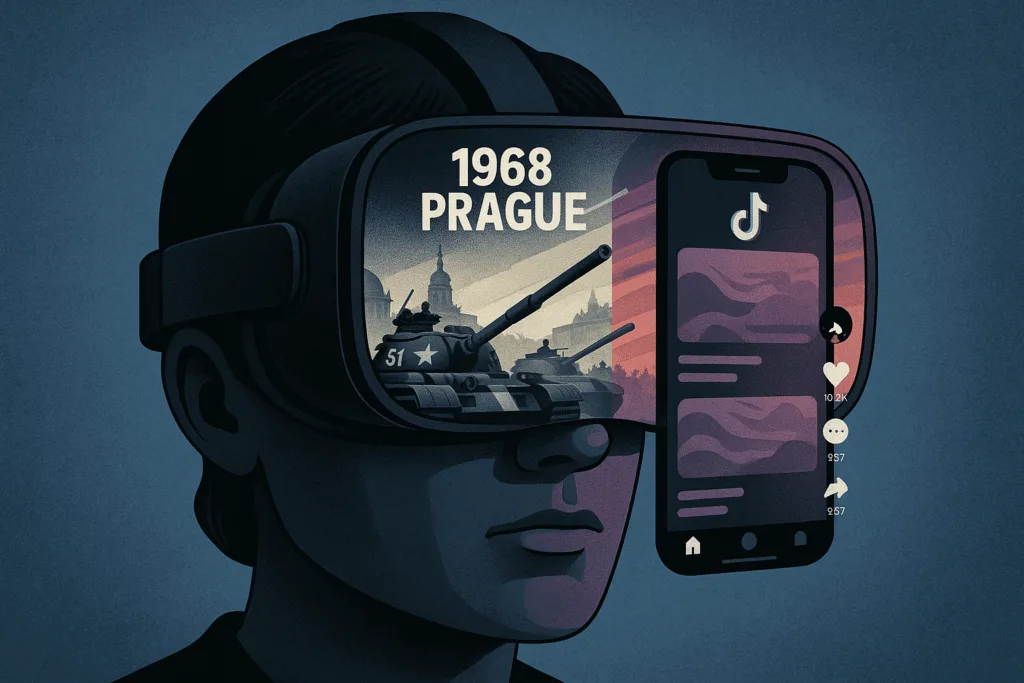
Europe must do more than commemorate what happened between 1933 and 1945. It must also reckon with what happened in 1956 in Hungary, in 1968 in Prague, in 1973 in Spain and Portugal, in the prisons and secret police archives scattered across the continent. This is not a question of competing histories, but of completing history.
To build resilience, remembrance must be systemic, participatory, and transnational. It must bring youth into the conversation, not as passive receivers of history, but as active investigators, storytellers, and translators between past and present. A 2022 FRA study showed that participatory remembrance projects increase civic trust and empathy among young people by up to 40%. This is powerful evidence that history, when co-created, strengthens democracy.
Policy frameworks are catching up. The EU’s Democracy Action Plan and upcoming European Democracy Shield both emphasize media literacy, combating disinformation, and reinforcing collective memory as democratic infrastructure. The challenge is ensuring that remembrance extends beyond the Holocaust to include the broader spectrum of authoritarian crimes.
And remembrance must expand beyond monuments into creative, digital, and immersive spaces—because the authoritarian playbook has also gone digital. Projects such as Poland’s Institute of National Remembrance VR Archive, Germany’s Stasi Records Agency digital exhibitions, and Spain’s grassroots exhumation movements show how technology, storytelling, and citizen action can converge to make hidden histories visible and relatable.
Closing the Gap
If Europe wants to stand strong against disinformation, authoritarian nostalgia, and democratic backsliding, it must close its memory gaps. Honoring the victims of communism, Iberian dictatorships, and other post-war authoritarian systems is not about diluting the Holocaust. It is about creating a fuller, more inclusive narrative of what authoritarianism does—and why it must never return.
As George Santayana famously warned: “Those who cannot remember the past are condemned to repeat it.” In 2025, with disinformation campaigns and authoritarian temptations rising once again, those words feel less like a cliché and more like a warning flare.
The future of democracy depends on whether Europe has the courage to confront all its past—not only the chapters already inscribed in stone, but those still waiting to be remembered. As writer and survivor Jorge Semprún, imprisoned in Buchenwald and later exiled from Francoist Spain, put it: “The memory of the dead is not for the dead. It is for the living.”
